
If you want the short answer first, induction cooktops are usually better for most home cooks who value speed, precision, energy efficiency, and day-to-day safety, while electric cooktops still make sense for shoppers who want a lower upfront cost and broader cookware compatibility. In other words, induction often wins on cooking performance, but electric can still be the more practical choice in some kitchens. For a complete overview, see induction cooktop comparisons.
To understand that answer clearly, you need to start with the core difference between the two cooktops: they generate heat in completely different ways. Induction uses electromagnetic energy to heat the pan itself, while electric cooktops use a heated surface to transfer heat into cookware. That single difference explains why induction is often faster and more responsive in everyday cooking.
Just as importantly, most home cooks are not only asking which option cooks better. They are also asking which one is easier to live with, which one costs less over time, and which one fits their cooking style. That is why this guide compares performance, safety, cleanup, cookware needs, and long-term value instead of treating this as a purely technical appliance discussion.
Finally, choosing the better stove depends on context. A casual cook with existing non-magnetic pans may prefer electric, while a frequent home cook who wants quick boiling, steady simmering, and cleaner heat control will likely prefer induction. Below, we will move from the core difference to performance, pros and cons, costs, and real-life fit so you can choose with confidence.
What Is the Difference Between Induction and Electric Cooktops?
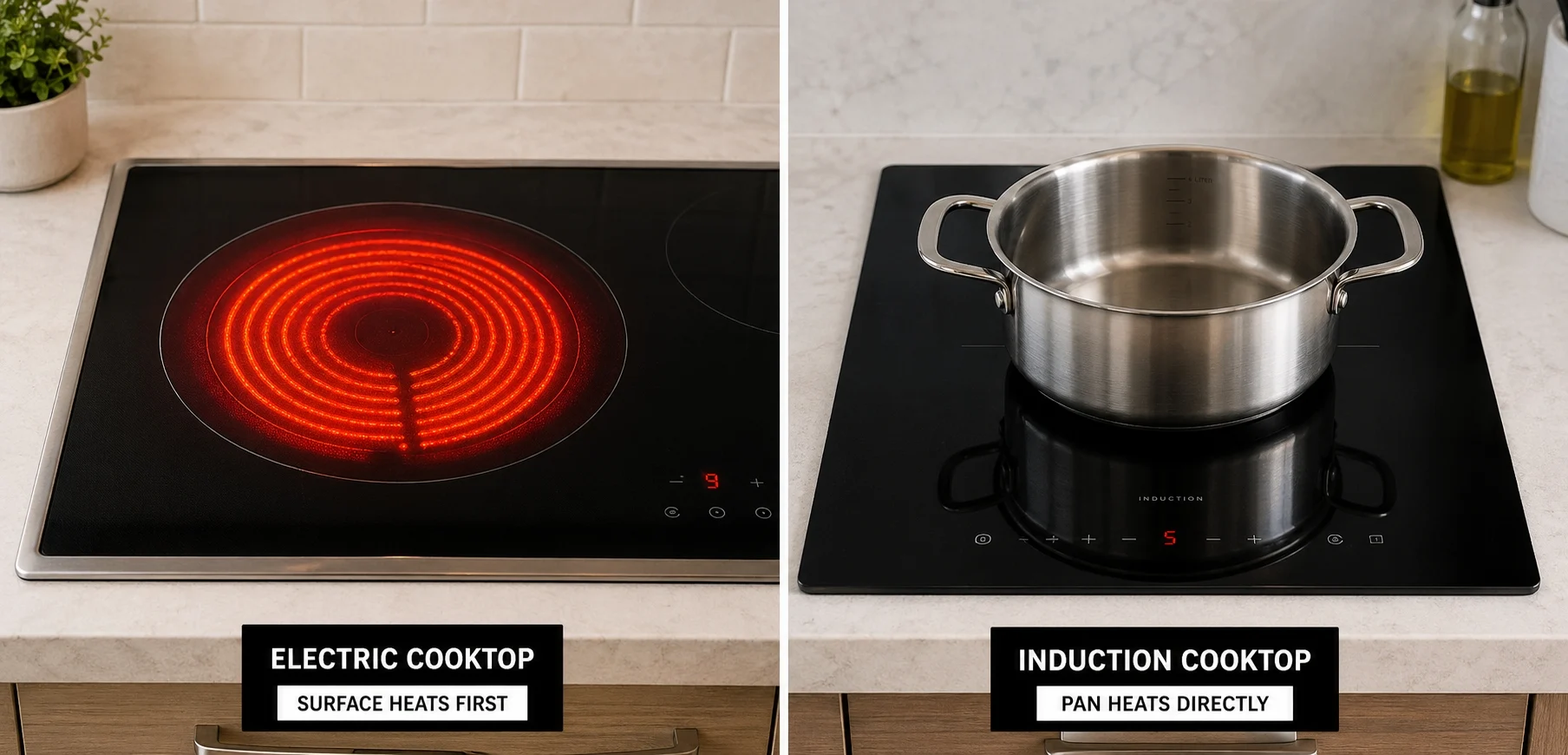
Induction cooktops and electric cooktops are not the same: induction heats the pan with electromagnetic energy, while electric cooktops heat the glass or ceramic surface and then transfer that heat into the cookware.
To understand the difference between induction and electric cooktops, however, you need to look beyond appearance. Both often look similar from above, especially when they use smooth glass surfaces. Yet the cooking experience changes because the heat path changes. With induction, the cookware becomes the heat source. With electric, the cooking surface becomes hot first and then passes heat upward into the pan.
How Do Induction Cooktops and Electric Cooktops Generate Heat?
Induction cooktops generate heat directly in magnetic cookware, while electric cooktops generate heat at the burner surface first and then transfer it to the pot or pan.
That heating method is the most important distinction in the entire comparison. Specifically, an induction cooktop creates a magnetic field under the glass surface. When compatible cookware sits on the cooking zone, the field excites the metal in the pan and produces heat inside the cookware itself. Because the pan heats directly, less heat is wasted into the surrounding air and the surface generally stays cooler than a radiant electric top during active cooking.
How to check if cookware is induction compatible
By contrast, an electric cooktop uses radiant elements beneath the surface. Those elements heat the cooktop zone, and the hot zone then warms the cookware. The process is familiar and widely available, but it usually responds more slowly when you turn the heat up or down because the burner and surface retain heat. That retained heat can be useful in some cooking situations, yet it also reduces precision compared with induction.
Are Induction Cooktops and Electric Cooktops the Same in Daily Cooking Performance?
No, induction cooktops and electric cooktops do not perform the same in daily cooking because induction is typically faster, more precise, and more efficient.
Because the performance gap matters in real kitchens, this difference shows up in small but meaningful daily moments. Water usually comes to a boil faster on induction. Sauces tend to respond more quickly when you lower the heat. Simmering can feel steadier because the pan reacts sooner to temperature changes. In a home where people cook often, these improvements are not just technical advantages; they change the rhythm of cooking and reduce waiting time.
Electric cooktops, on the other hand, still perform adequately for most basic home cooking. They can boil, fry, sauté, and simmer, but they usually do so with more lag between temperature changes. For some cooks, that lag is minor. For others, especially people who cook delicate foods or multi-step meals, it becomes one of the main reasons to upgrade to induction.
According to Rewiring America, induction cooking is faster and more precise than electric cooking, especially in boiling and cooking time. According to Consumer Reports, induction also tends to outperform electric from a performance standpoint.
Why switch to induction — energy and eco benefits
Which Cooktop Heats Faster, Cooks More Evenly, and Responds Better to Temperature Changes?
Induction wins on heating speed, temperature response, and precision, while electric remains acceptable for routine cooking but usually lags behind on control and responsiveness.
To compare induction and electric cooktops fairly, it helps to evaluate them through the tasks most home cooks actually do: boiling water, preheating pans, searing proteins, simmering sauces, and adjusting heat mid-recipe. In those use cases, induction usually feels more immediate and controllable, which is why so many “which is better” guides lean in its favor.
The table below summarizes the most important performance differences between induction and electric cooktops for home use.
| Cooking factor | Induction cooktops | Electric cooktops |
|---|---|---|
| Heat-up speed | Very fast | Slower |
| Response when lowering heat | Quick | Delayed |
| Precision for simmering | Strong | Moderate |
| Surface heat loss | Lower | Higher |
| Everyday familiarity | Moderate learning curve | Very familiar |
| Best fit | Frequent cooks, precision-focused cooks | Budget-focused or familiarity-focused cooks |
Which Cooktop Boils Water and Heats Pans Faster?
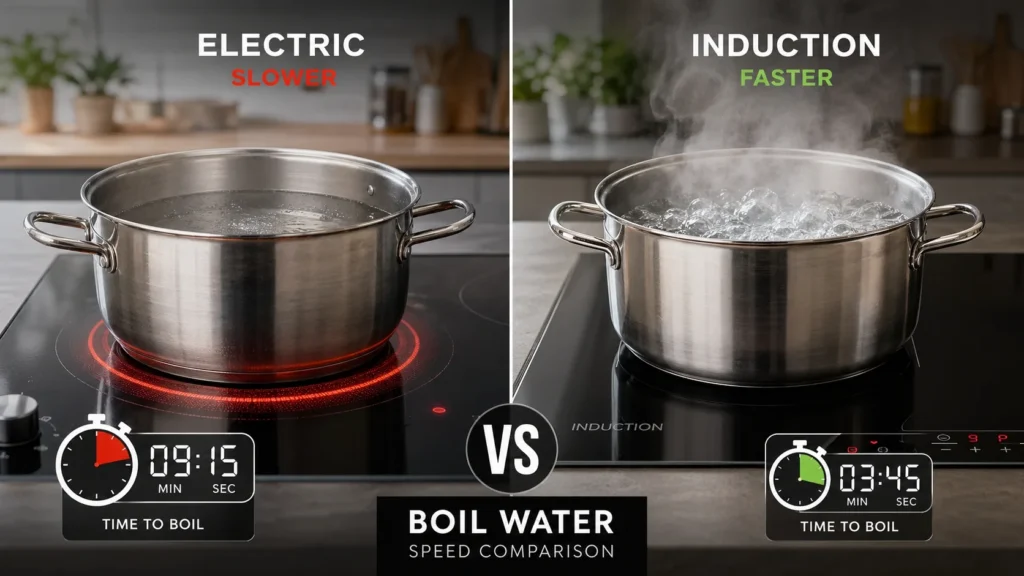
Induction cooktops heat pans and boil water faster because they transfer energy more directly into the cookware instead of heating the surface first.
That speed advantage is one of induction’s clearest benefits. If you regularly boil pasta water, heat soup, or preheat a skillet for a weeknight dinner, induction saves time in the most repetitive parts of cooking. The improvement feels especially noticeable when you cook multiple meals per day or prepare large family dinners.
Electric cooktops can still handle these jobs, but they usually take longer to reach high heat. Because the burner must first warm the cooktop surface and then the cookware, more energy is lost during the process. That does not make electric unusable; it simply means the cooking flow is slower.
According to Whirlpool, induction cooktops can provide fast cooking because heat does not have to transfer through the cooking surface. According to Martha Stewart, induction cooktops generally heat up much faster than electric cooktops.
Which Cooktop Gives Better Control for Simmering, Searing, and Everyday Recipes?
Induction gives better control for simmering, searing, and everyday recipes because it responds faster to temperature adjustments and delivers more precise heat.
That precision matters most when the recipe depends on timing and stability. For example, if you are making oatmeal, melting chocolate, thickening a cream sauce, or cooking eggs gently, the ability to lower heat quickly can prevent scorching. If you are searing meat, faster pan recovery after adding cold food helps maintain browning. Induction makes both of those tasks easier because the cookware responds sooner when the setting changes.
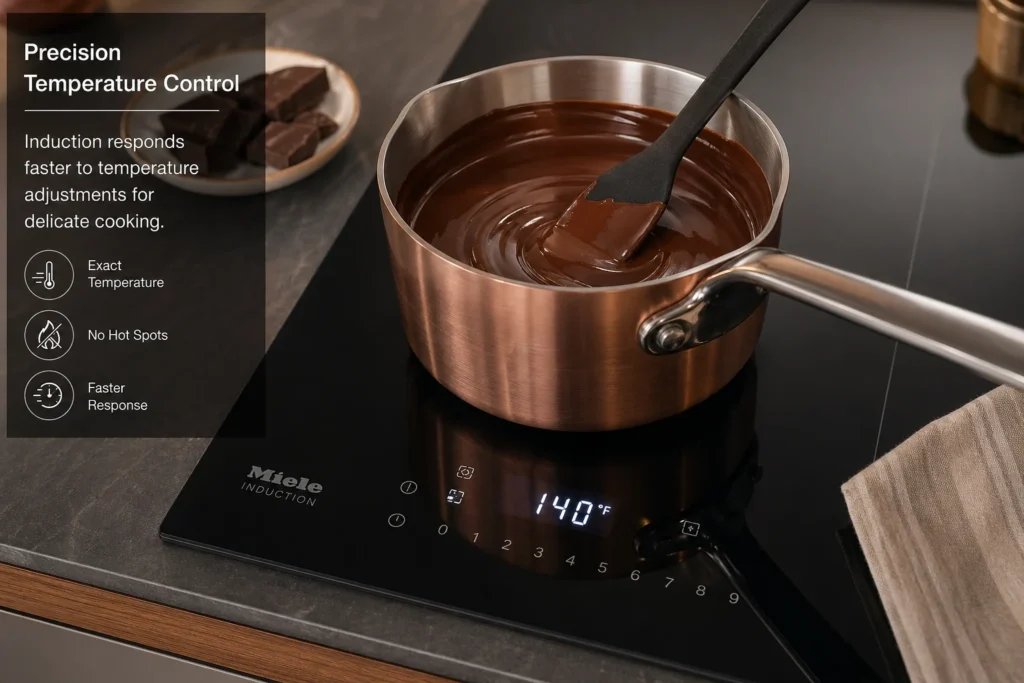
Electric cooktops, in contrast, often continue radiating stored heat even after you turn the setting down. Home cooks who are used to electric ranges often learn to anticipate that carryover heat, but it still creates more guesswork. That is one reason experienced home cooks frequently describe induction as more intuitive once they adjust to it.
According to Consumer Reports, induction cooktops earn especially strong marks for simmering steadily. According to Rewiring America, induction is also more precise than electric cooking.
What Are the Main Pros and Cons of Induction vs Electric Cooktops?
Induction offers faster cooking, higher efficiency, and better safety, while electric offers lower upfront cost, wider cookware compatibility, and a more familiar cooking experience.
To judge induction vs electric cooktops properly, you need to balance benefits against trade-offs instead of assuming one option wins in every category. Home appliance decisions are rarely absolute. A better performer is not always the better purchase if it does not match your cookware, your kitchen setup, or your budget.
What Are the Biggest Advantages and Disadvantages of Induction Cooktops?
The biggest advantages of induction cooktops are speed, precision, efficiency, and safety, while the biggest disadvantages are higher upfront cost, cookware compatibility limits, and a mild learning curve.
Because induction heats the pan directly, it wastes less heat and usually cooks faster. That can shorten meal prep and improve control when recipes require fast adjustments. Many households also appreciate the safety benefit: the cooktop surface generally does not get as hot as a radiant electric surface because the energy is focused into compatible cookware instead of the glass itself. Cleanup can also be easier because food is less likely to bake onto a superheated surface.
The drawbacks are practical, not trivial. Induction cooktops usually cost more to buy. They also require magnetic cookware, so some households may need to replace pans. In addition, cooks who have used radiant electric for years may need time to adapt because induction responds much faster than they expect. That learning curve is temporary, but it is real.
What Are the Biggest Advantages and Disadvantages of Electric Cooktops?
The biggest advantages of electric cooktops are lower purchase price, broad cookware compatibility, and familiarity, while the biggest disadvantages are slower heating, lower responsiveness, and more retained surface heat.
Electric cooktops remain popular for good reasons. They are easy to understand, widely available, and often more affordable at the entry level than induction models. Most home cooks can continue using their existing cookware without checking whether it is magnetic. For renters, remodelers on a fixed budget, or homeowners replacing an older radiant unit, that simplicity can be very attractive.
Still, the trade-offs matter. Electric surfaces take longer to heat and cool, which reduces precision. They also stay hot longer after cooking, which can increase burn risk and make cleanup harder if spills set onto the surface. For home cooks who prepare meals frequently, those small inefficiencies can become frustrating over time.
According to Maytag, comparing electric and induction cooktops involves understanding how each works, the pros and cons of each, and which key differences matter most for choosing the right cooktop.
Which Cooktop Costs Less to Buy, Use, and Maintain Over Time?
Electric cooktops usually cost less to buy, but induction cooktops can offer better efficiency and stronger long-term value for home cooks who use their stove often.
To compare total cost fairly, you have to separate upfront cost from running cost and practical value over time. Many shoppers stop at the price tag, but the cheaper appliance at checkout is not always the one that feels cheaper after years of regular cooking. Source
Is Induction Worth the Higher Upfront Cost for Home Cooks?
Yes, induction is often worth the higher upfront cost for home cooks because it offers faster cooking, better control, and stronger energy efficiency, especially for households that cook frequently.
That answer depends on usage. If you cook once in a while, use a limited budget, and already own cookware you like, paying extra for induction may not feel necessary. However, if you cook most days, value speed on busy evenings, or care about precise heat control, the benefits show up repeatedly. Over time, the convenience itself becomes part of the value proposition.
Induction may also make more sense in households with children or safety concerns because the surface behavior is typically safer than traditional radiant cooking. That does not mean induction is the only safe choice, but it does mean its higher price can buy more than just performance.
Which Cooktop Is More Energy Efficient in Everyday Home Use?
Induction cooktops are generally more energy efficient in everyday home use because they direct more energy into the cookware and lose less heat to the surrounding surface and air.
Efficiency matters because it influences both performance and operating cost. When more of the energy goes into the pan, food heats faster and less power is wasted. In everyday terms, that means boiling water with less delay, less residual heat in the kitchen, and potentially lower utility usage over time, even if the savings vary by cooking habits.
Electric cooktops are less efficient mainly because more heat is lost during transfer. They first heat the cooking surface and then the cookware, which introduces another stage where energy can dissipate. For households that cook often, this gap becomes more meaningful.
According to Whirlpool, induction cooktops can use less energy during cooking. According to Consumer Reports, induction cooktops are also somewhat more efficient than electric smoothtops.
Which Stove Is Better for Different Types of Home Cooks?
Induction is better for frequent, precision-focused, and efficiency-minded home cooks, while electric is better for budget-focused cooks who want familiarity and wider cookware compatibility.
To choose the better stove, however, you should match the appliance to the cook, not just the lab-style comparison. The best cooktop for one kitchen may be the wrong choice for another. A family that cooks nightly and values control will not prioritize the same things as a casual cook replacing a broken stove quickly.

Should Casual Home Cooks Choose Electric Cooktops?
Yes, casual home cooks may prefer electric cooktops because they cost less upfront, work with more cookware, and feel familiar from day one.
That makes electric a reasonable option for apartments, secondary kitchens, and households where cooking is mostly simple and infrequent. If you mainly boil, reheat, scramble, and sauté without caring much about nuanced temperature control, electric can do the job just fine. It also removes the friction of checking whether each pan is induction-compatible.
Still, “good enough” should be your standard only if it matches your habits. If your cooking becomes more frequent or more technique-driven, electric may start to feel limiting in ways that were not obvious at first.
Should Frequent or Precision-Focused Home Cooks Choose Induction Cooktops?
Yes, frequent or precision-focused home cooks should usually choose induction because it delivers faster heating, tighter temperature control, and better overall efficiency.
This is especially true for people who cook from scratch several times a week, prepare recipes that shift between high heat and low simmer, or simply want a more responsive tool in the kitchen. Induction supports that style of cooking better because it reacts quickly and wastes less motion, time, and heat.
It can also improve daily comfort. Kitchens often feel less overheated, cleanup may be easier, and the cooking process tends to feel more predictable once you learn the settings. For many serious home cooks, that combination is exactly why induction feels like an upgrade rather than just a different type of stove.
According to CNET, induction is typically faster and more energy efficient than electric, though the right choice still depends on the buyer’s situation. According to Rewiring America, induction offers faster and more precise cooking.
What Else Should Home Cooks Know Before Choosing an Induction or Electric Cooktop?
Before choosing an induction or electric cooktop, home cooks should also consider cookware compatibility, residual heat, unusual operating traits, and installation requirements.
At this point, the main search intent is already answered: induction is generally better for performance, while electric remains a valid choice for cost and compatibility. However, buying decisions often hinge on the smaller details people discover late in the process. Those micro-decisions can change which option feels practical in your home.
Do Induction Cooktops Require Magnetic Cookware?
Yes, induction cooktops require magnetic cookware because the cooking system depends on electromagnetic interaction with the pot or pan.
This is one of the most important ownership questions. If a magnet sticks firmly to the bottom of the cookware, the pan will usually work on induction. Cast iron and many stainless steel pans are compatible, while aluminum, copper, and glass cookware often need a magnetic base or will not work at all.
That requirement affects cost and convenience. Some households already own compatible cookware and can switch easily. Others may need to replace several favorite pans, which increases the real cost of moving to induction. It is a manageable issue, but it should be checked before buying the cooktop.

Do Electric Cooktops Stay Hot Longer After Cooking?
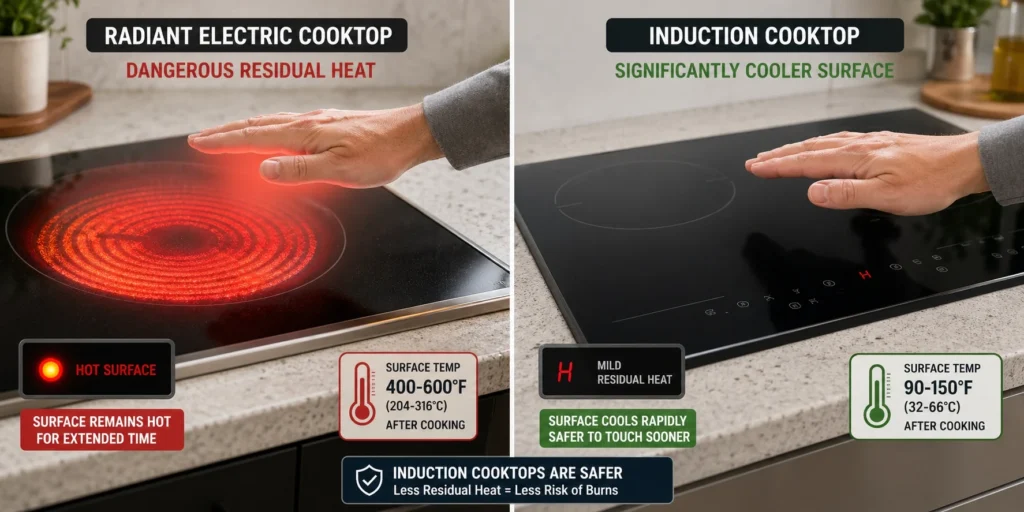
Yes, electric cooktops usually stay hot longer after cooking because the burner surface retains heat even after the setting is lowered or turned off.
That residual heat is one of the most practical differences between electric and induction. It can be useful if you intentionally rely on carryover heat, but it is also the reason electric cooktops can feel less responsive and somewhat riskier around children or distracted cooks. Spills may also continue cooking onto the surface after the burner is off.
Induction behaves differently because the cookware is the main heat source. The glass can still become warm from contact with the hot pan, but the cooking surface itself is not heated in the same way as a radiant electric zone.
Can Induction Cooktops Cause Buzzing Sounds or Interfere With Medical Devices?
Yes, some induction cooktops can make mild buzzing sounds, and some buyers should review medical-device guidance before purchase, although these issues do not affect most households in daily use.
Buzzing or humming can happen because induction uses electromagnetic energy and high-frequency power. In many kitchens, the sound is minor, temporary, or cookware-dependent. Heavier, flatter pans often perform more quietly than thin or uneven ones. This is not usually a deal-breaker, but it is useful to know so the experience does not feel surprising after installation.
As for medical devices, shoppers with pacemakers or other implanted devices should follow manufacturer guidance and ask both the appliance brand and healthcare provider if they have concerns. This is a specialized edge case, but it is exactly the kind of rare attribute that matters a lot to the households it affects.
What Electrical Requirements Matter Before Installing an Induction Cooktop or Electric Cooktop?
The most important electrical requirements are circuit capacity, voltage, breaker compatibility, and whether your kitchen is already set up for the cooktop you plan to install.
That installation layer can affect both cost and convenience. In some homes, replacing one electric cooktop with another is straightforward. In other homes, especially during a remodel or when switching formats, the electrical setup may need adjustment. This is why “which stove is better” is not always just a cooking question; it can also be an installation question.
Before buying, confirm the manufacturer’s installation specifications, your home’s electrical capacity, and whether a licensed professional is recommended. That small step can prevent expensive surprises later and helps you evaluate the true total cost of either option.
According to the Natural Handyman, induction cooktop installation should be assessed with attention to electrical requirements and proper setup. Practical installation planning also matters for standard cooktop replacement and fit.
How to install an induction cooktop
In summary, induction is the better stove for most home cooks who prioritize speed, precision, efficiency, and modern cooking control, while electric remains a sensible option for buyers who prioritize lower upfront cost, broader pan compatibility, and familiarity. The right choice depends less on marketing claims and more on how often you cook, what cookware you own, and what kind of kitchen experience you want every day.